
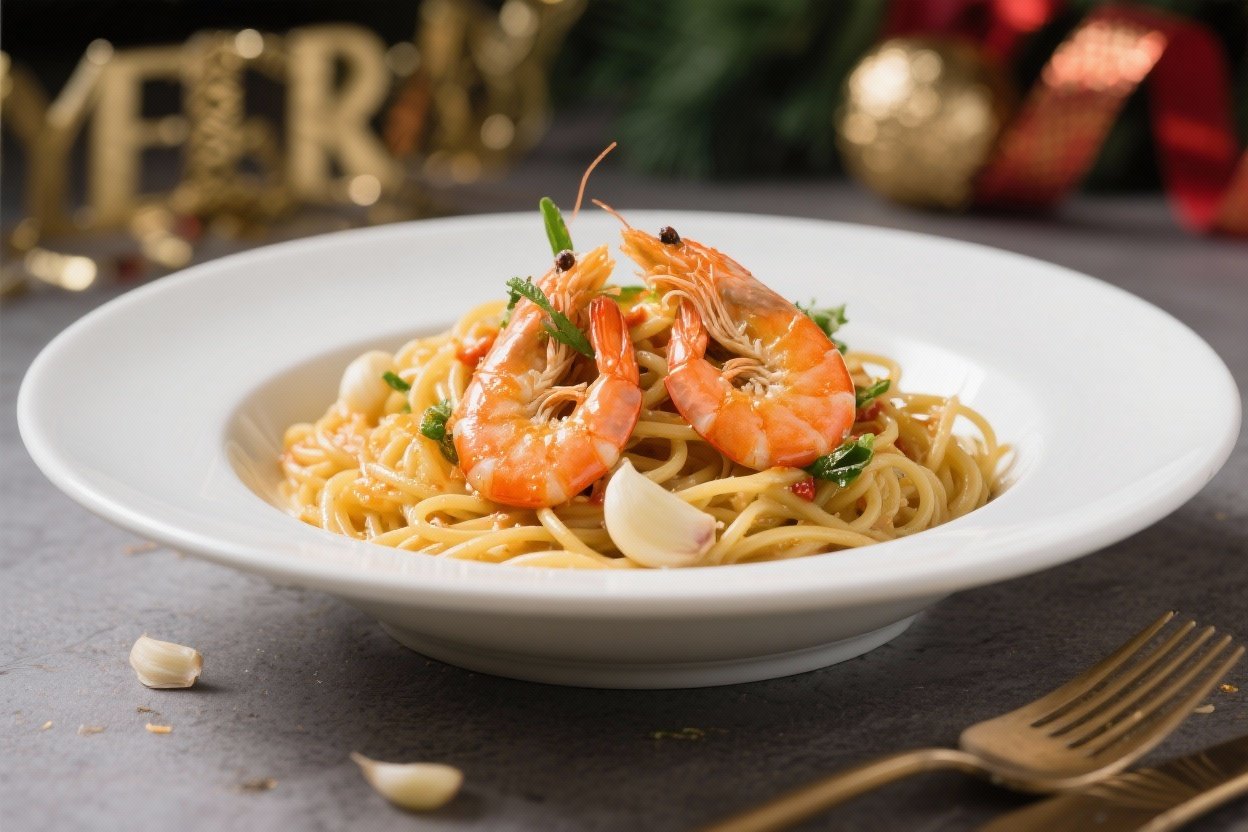
New Year’s Eve calls for something a little special without being complicated. This Garlic Shrimp Pasta hits that sweet spot: it’s quick, elegant, and full of flavor. The sauce is buttery, garlicky, and kissed with lemon and white wine, while the shrimp stay juicy and tender.
It feels restaurant-worthy but comes together in under 30 minutes. Whether you’re cooking for two or a small gathering, this is a dish that closes out the year on a high note.
Why This Garlic Shrimp Pasta Recipe Works
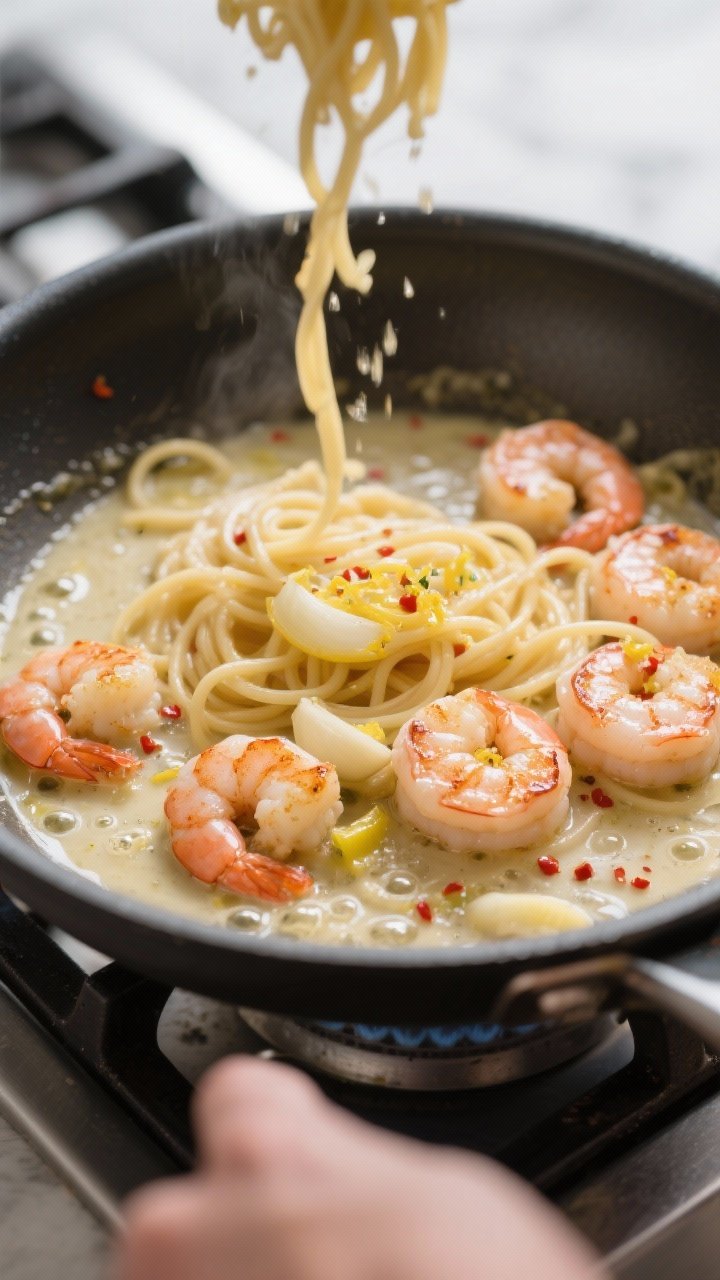
This pasta leans on a few quality ingredients that do the heavy lifting. Plenty of fresh garlic blooms in olive oil and butter, creating a rich base that clings to the pasta.
A splash of dry white wine and lemon juice brightens everything and balances the richness.
Searing the shrimp quickly over medium-high heat keeps them tender and sweet. Finishing with parsley, red pepper flakes, and a touch of pasta water pulls the sauce together. The result is a glossy, flavorful pasta that feels celebratory without being heavy.
Ingredients for Garlic Shrimp Pasta
- 12 ounces pasta (spaghetti, linguine, or fettuccine)
- 1 pound large shrimp, peeled and deveined, tails on or off
- 4 tablespoons unsalted butter
- 2 tablespoons extra-virgin olive oil
- 6 cloves garlic, thinly sliced or minced
- 1/2 teaspoon red pepper flakes (adjust to taste)
- 1/2 cup dry white wine (such as Pinot Grigio or Sauvignon Blanc)
- 1 lemon (zest and 2–3 tablespoons juice)
- 1/2 cup chopped fresh parsley
- 1/2 cup grated Parmesan (optional but recommended)
- Kosher salt and freshly ground black pepper, to taste
- Pasta water (reserve about 1 cup)
Instructions for Garlic Shrimp Pasta
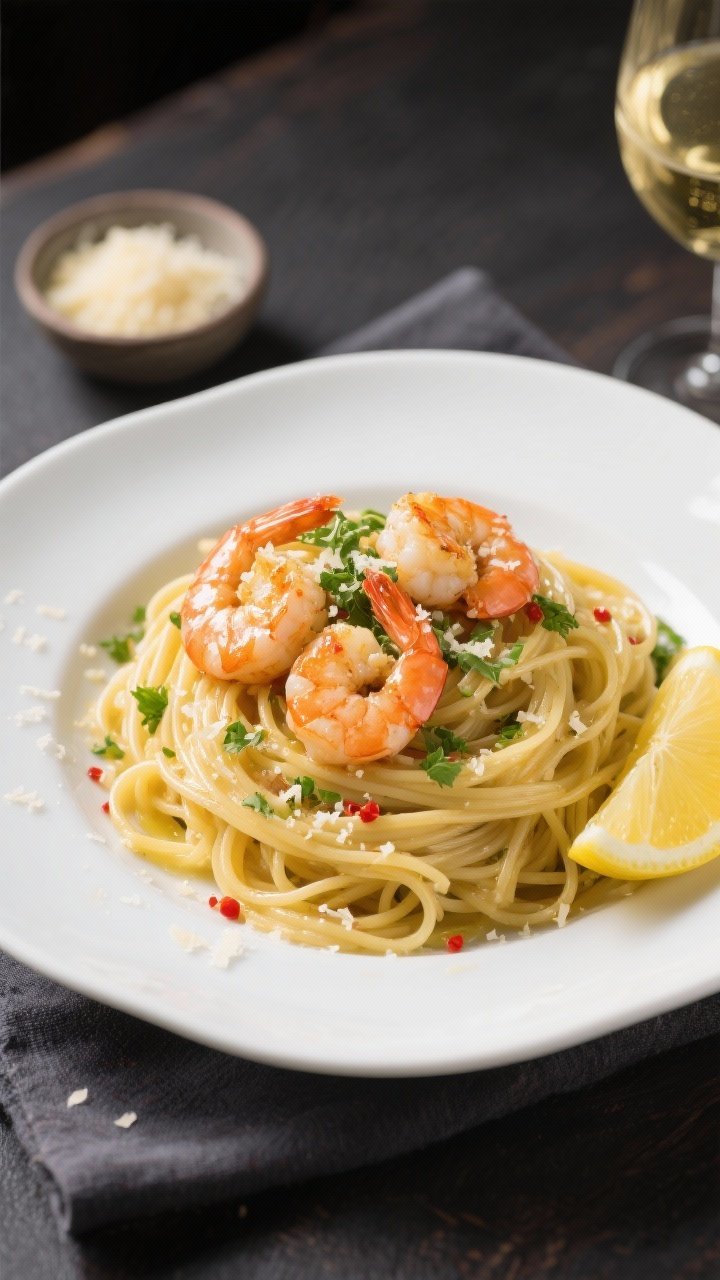
- Bring a large pot of salted water to a boil. Add pasta and cook until just shy of al dente.Reserve about 1 cup of pasta water, then drain.
- Season the shrimp. Pat shrimp dry with paper towels. Toss with a pinch of salt, pepper, and half the red pepper flakes.
- Start the sauce base. In a large skillet, warm olive oil over medium heat. Add half the butter and let it melt.Add the garlic and cook 30–60 seconds until fragrant, not browned.
- Cook the shrimp. Increase heat to medium-high. Add shrimp in a single layer and cook 1–2 minutes per side until just pink and opaque. Transfer shrimp to a plate to prevent overcooking.
- Deglaze with wine. Pour in the white wine, scraping up any browned bits.Simmer 2–3 minutes until slightly reduced and the alcohol smell softens.
- Add lemon. Stir in lemon zest and juice. Add the remaining butter and swirl until glossy.
- Build the sauce. Add a splash of reserved pasta water (start with 1/4 cup). Whisk or swirl to create an emulsified sauce that looks silky.
- Toss the pasta. Add the drained pasta to the skillet.Toss to coat, adding more pasta water as needed to loosen. Season with salt and pepper to taste.
- Finish and serve. Return shrimp and any juices to the pan. Toss with parsley and the remaining red pepper flakes.Sprinkle with Parmesan if using. Plate immediately with lemon wedges on the side.
How to Store Garlic Shrimp Pasta
Let leftovers cool, then transfer to an airtight container. Refrigerate for up to 2 days.
Reheat gently in a skillet over low heat with a splash of water, broth, or extra olive oil to loosen the sauce.
Shrimp can turn rubbery if overheated, so warm just until hot. This dish doesn’t freeze well due to the delicate texture of the shrimp and the emulsion in the sauce.
Benefits of This Garlic Shrimp Pasta Recipe
- Fast but festive: From prep to plate in under 30 minutes, perfect for a busy evening.
- Balanced flavor: Butter and garlic meet citrus and wine for a bright, savory finish.
- Adaptable: Works with different pastas, spice levels, and add-ins.
- Light yet satisfying: Rich enough for a celebration without leaving you sluggish.
- One-pan sauce: Minimal cleanup, which is especially nice on a holiday.
What Not to Do
- Don’t overcook the shrimp. They only need 1–2 minutes per side. Pull them as soon as they turn pink and curl.
- Don’t skip the pasta water. Its starch helps the sauce cling and turn silky.Plain water won’t do the same job.
- Don’t brown the garlic. Burnt garlic tastes bitter. Keep the heat moderate and watch closely.
- Don’t drown the pasta in sauce. Aim for a light coating that shines, not a soupy bowl.
- Don’t use sweet wine. A dry white keeps the sauce bright and clean.
Alternatives
- Pasta swaps: Linguine, spaghetti, or bucatini are classics. For a shorter shape, try penne or fusilli.
- No wine: Use low-sodium chicken or vegetable broth plus an extra squeeze of lemon.
- Herb variations: Basil or chives can stand in for parsley.A touch of tarragon adds a subtle anise note.
- Veggie add-ins: Cherry tomatoes, baby spinach, asparagus tips, or peas can be tossed in during the last few minutes.
- Dairy-free: Replace butter with more olive oil and skip Parmesan. Add toasted breadcrumbs for texture.
- Gluten-free: Use your favorite gluten-free pasta and be gentle when tossing.
- Extra rich: Stir in a splash of cream at the end for a fuller sauce, or add a knob of butter off heat.
- Heat level: Adjust red pepper flakes to taste, or add a pinch of cayenne for a different kick.
FAQ
Can I use frozen shrimp?
Yes. Thaw in the fridge overnight or quickly under cold running water.
Pat very dry before cooking to get a good sear and avoid watering down the sauce.
What’s the best pasta shape for this sauce?
Linguine or spaghetti are ideal because the thin sauce coats long strands evenly. If you prefer short pasta, choose shapes with ridges like fusilli or rigatoni for better cling.
Can I make it ahead?
You can prep the ingredients—mince garlic, zest the lemon, chop parsley, and clean the shrimp. Cook the pasta and sauce right before serving for the best texture.
Reheated shrimp can go rubbery, so it’s best fresh.
What if I don’t cook with alcohol?
Use broth instead of wine and add extra lemon juice to brighten the sauce. You’ll still get a delicious, well-balanced flavor.
How do I know the shrimp are done?
They turn pink and opaque, with a slight C-shape curl. If they tighten into a tight O-shape, they’re overcooked.
Err on the side of just done.
Is Parmesan traditional with seafood pasta?
Opinions vary, but it tastes great here. Keep it light so it doesn’t overshadow the shrimp and lemon. Pecorino can be a sharper alternative.
Can I add cream?
Yes, a few tablespoons stirred in at the end makes it richer.
Keep the lemon balanced, as too much acid can cause cream to separate.
What wine should I use?
A dry white like Pinot Grigio, Sauvignon Blanc, or a light Chardonnay works well. Avoid sweet wines to keep the sauce crisp.
How can I make it spicier?
Increase red pepper flakes, add a pinch of cayenne, or finish with chili oil. Taste as you go so the heat doesn’t overwhelm the lemon and garlic.
Can I use pre-minced garlic?
Fresh garlic has the best flavor.
Jarred garlic works in a pinch, but you may need a bit more and should watch closely to avoid bitterness.
In Conclusion
New Year’s Eve garlic shrimp pasta is simple, bright, and worthy of a toast. With buttery garlic, fresh lemon, and tender shrimp, it feels festive without the fuss. Pair it with a crisp white wine and a green salad, and you’ve got a dinner that’s both easy and memorable.
Here’s to ending the year with a delicious plate and starting the next one satisfied.
New Year’s Eve Garlic Shrimp Pasta – Bright, Festive, and Fast
Ingredients
- 12 ounces pasta (spaghetti, linguine, or fettuccine)
- 1 pound large shrimp, peeled and deveined, tails on or off
- 4 tablespoons unsalted butter
- 2 tablespoons extra-virgin olive oil
- 6 cloves garlic, thinly sliced or minced
- 1/2 teaspoon red pepper flakes (adjust to taste)
- 1/2 cup dry white wine (such as Pinot Grigio or Sauvignon Blanc)
- 1 lemon (zest and 2–3 tablespoons juice)
- 1/2 cup chopped fresh parsley
- 1/2 cup grated Parmesan (optional but recommended)
- Kosher salt and freshly ground black pepper, to taste
- Pasta water (reserve about 1 cup)
Instructions
- Bring a large pot of salted water to a boil. Add pasta and cook until just shy of al dente. Reserve about 1 cup of pasta water, then drain.
- Season the shrimp. Pat shrimp dry with paper towels. Toss with a pinch of salt, pepper, and half the red pepper flakes.
- Start the sauce base. In a large skillet, warm olive oil over medium heat. Add half the butter and let it melt. Add the garlic and cook 30–60 seconds until fragrant, not browned.
- Cook the shrimp. Increase heat to medium-high. Add shrimp in a single layer and cook 1–2 minutes per side until just pink and opaque. Transfer shrimp to a plate to prevent overcooking.
- Deglaze with wine. Pour in the white wine, scraping up any browned bits. Simmer 2–3 minutes until slightly reduced and the alcohol smell softens.
- Add lemon. Stir in lemon zest and juice. Add the remaining butter and swirl until glossy.
- Build the sauce. Add a splash of reserved pasta water (start with 1/4 cup). Whisk or swirl to create an emulsified sauce that looks silky.
- Toss the pasta. Add the drained pasta to the skillet. Toss to coat, adding more pasta water as needed to loosen. Season with salt and pepper to taste.
- Finish and serve. Return shrimp and any juices to the pan. Toss with parsley and the remaining red pepper flakes. Sprinkle with Parmesan if using. Plate immediately with lemon wedges on the side.
Printable Recipe Card
Want just the essential recipe details without scrolling through the article? Get our printable recipe card with just the ingredients and instructions.

Sarah is a café cook and weeknight–recipe expert who specializes in simple, and healthy-ish meals. She creates recipes packed with flavor, perfect for anyone who wants great food without spending hours in the kitchen.