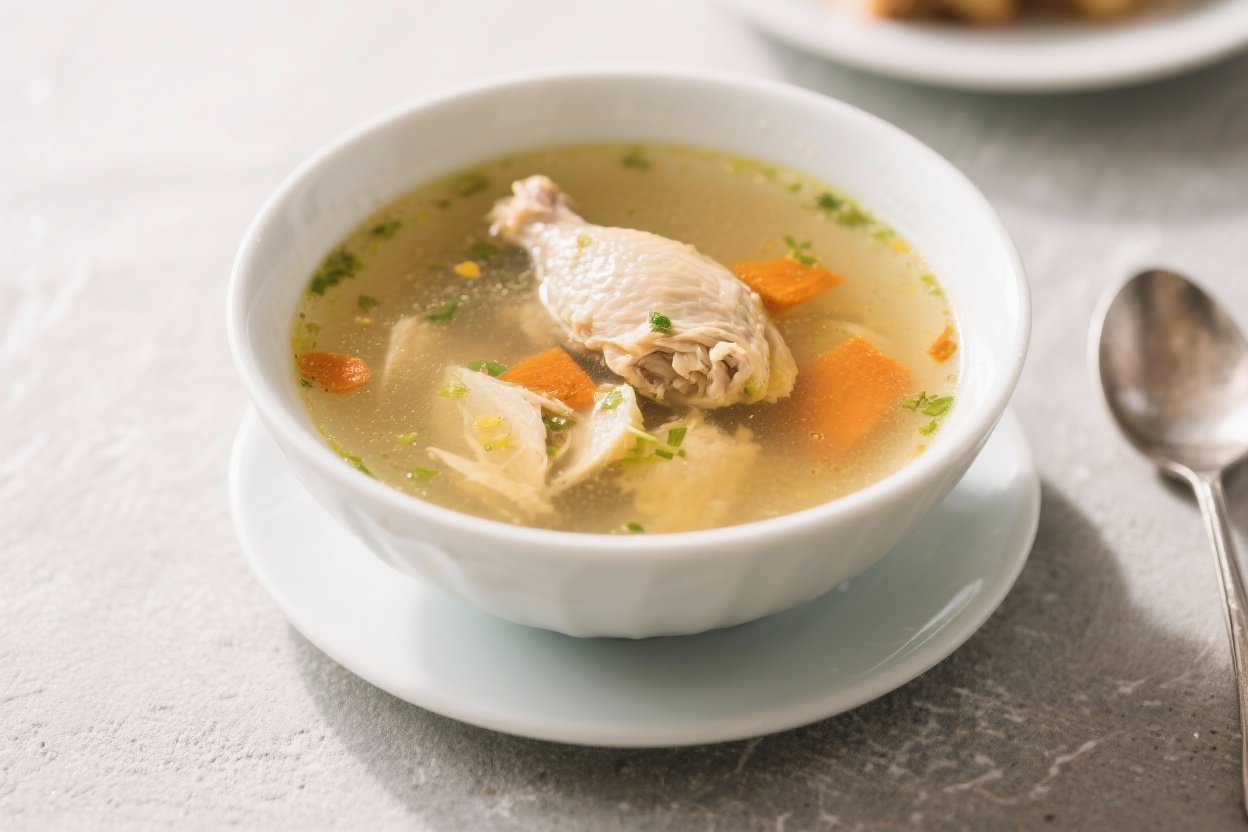
Chicken soup is the kind of meal that makes a cold day feel warm and a long day feel easier. It’s classic comfort food with a purpose: soothing, nourishing, and surprisingly straightforward to make. You don’t need fancy ingredients or special tools—just a pot, some vegetables, and chicken.
The result is a bowl that feels familiar and satisfying, whether you’re under the weather or just in the mood for something cozy.
What Makes This Chicken Soup Special
This chicken soup keeps things simple while delivering big flavor. It leans on fresh aromatics, a few smart techniques, and enough time to let everything come together. You’ll get a broth that’s clean and rich without being heavy, and vegetables that stay tender but not mushy.
It’s the kind of soup that tastes even better the next day. The base recipe is flexible. You can use a whole chicken, thighs, or a mix of bone-in pieces.
Want noodles, rice, or potatoes? Add them. Prefer it light and brothy?
Keep it as is. This soup is easy to tailor to your taste and what you have on hand.
Ingredients for this Chicken Soup
- Chicken: 2–2.5 pounds bone-in, skin-on thighs or a small whole chicken
- Water or low-sodium chicken broth: 8 cups
- Onion: 1 large, chopped
- Carrots: 3 medium, sliced
- Celery: 3 stalks, sliced
- Garlic: 4 cloves, minced
- Bay leaves: 2
- Fresh thyme: 4–5 sprigs (or 1 teaspoon dried)
- Parsley: A small handful, chopped (stems reserved for simmering)
- Olive oil or butter: 1–2 tablespoons
- Salt and black pepper: To taste
- Optional add-ins: 1 cup egg noodles, cooked rice, or diced potatoes; a squeeze of lemon; a pinch of red pepper flakes
Instructions for the Chicken Soup
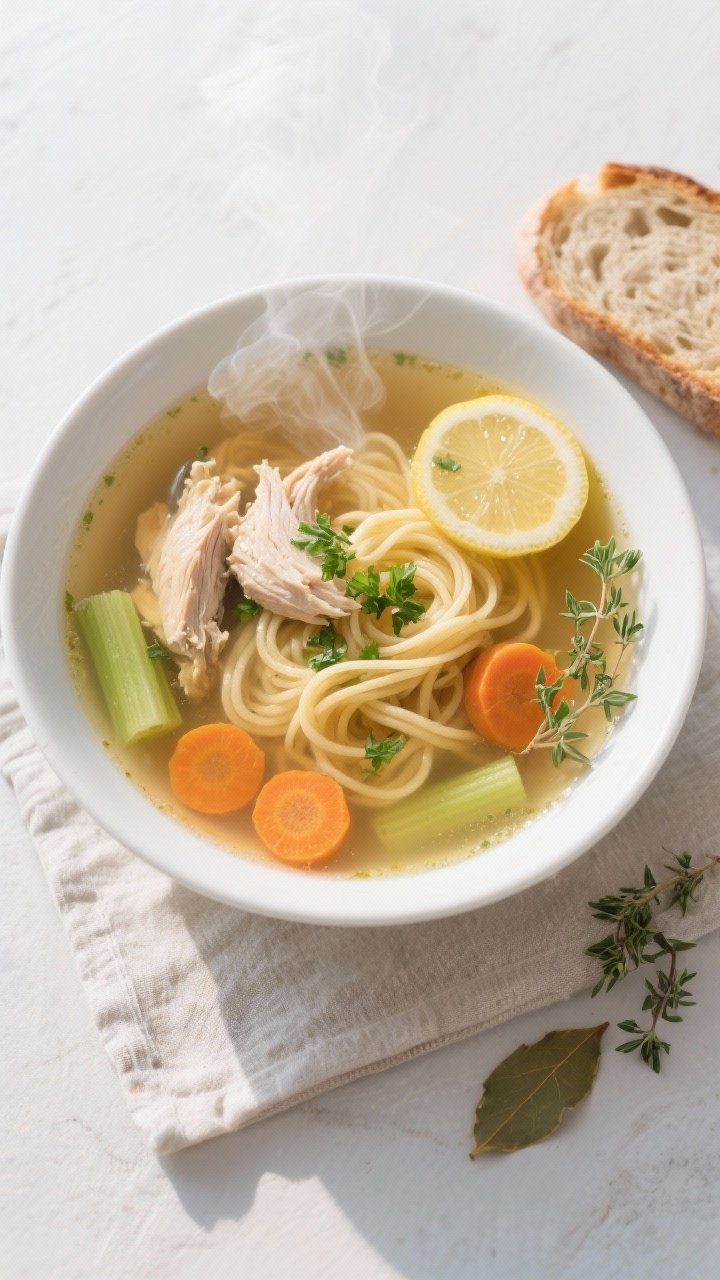
- Prep the aromatics. Chop the onion, carrots, and celery into even pieces so they cook evenly. Mince the garlic.Rinse the parsley and set the stems aside for the pot.
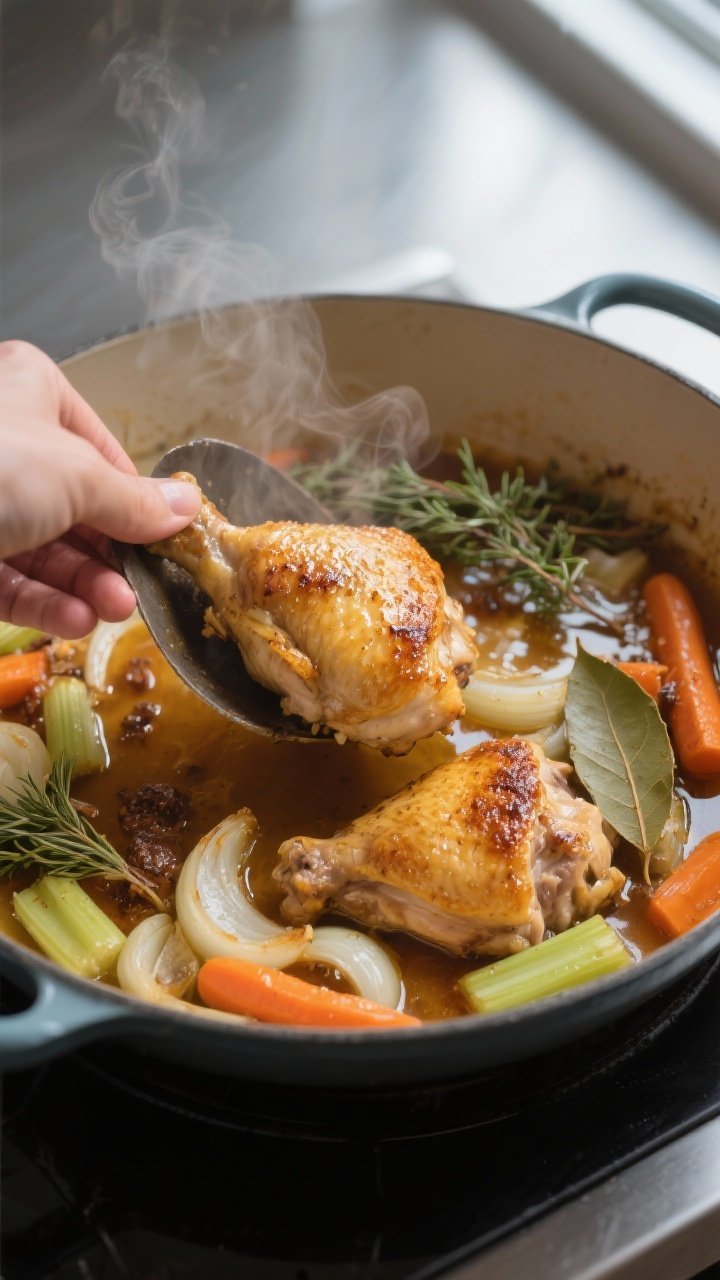
- Sear for flavor (optional but recommended). Heat olive oil or butter in a large pot over medium heat. Add the chicken, skin side down, and sear for 3–4 minutes per side until lightly browned. Remove and set aside.This step adds depth to the broth.
- Soften the vegetables. In the same pot, add onion, carrots, and celery with a pinch of salt. Cook 5–7 minutes until the onion is translucent. Stir in the garlic and cook 30 seconds until fragrant.
- Build the broth. Return the chicken to the pot.Add water or low-sodium broth, bay leaves, thyme, and parsley stems. Bring just to a boil, then reduce to a gentle simmer.
- Skim and simmer. Use a spoon to skim any foam from the surface in the first 10 minutes. Simmer uncovered for 35–45 minutes, or until the chicken is tender and cooked through.Keep it gentle—rolling boils can make the broth cloudy and the meat tough.
- Shred the chicken. Transfer the chicken to a bowl. Discard the skin and bones, then shred the meat into bite-sized pieces. Remove parsley stems, thyme sprigs, and bay leaves from the pot.
- Adjust seasoning. Return the shredded chicken to the pot.Taste and season with salt and pepper. If using noodles or potatoes, add them now and simmer until tender. If adding cooked rice, stir it in during the last few minutes to warm through.
- Finish and brighten. Stir in chopped parsley.Add a squeeze of lemon for freshness if you like. The soup should taste clean, savory, and balanced.
- Serve warm. Ladle into bowls and enjoy as-is or with crusty bread. This soup only gets better after resting, so leftovers are a bonus.
How to Store Chicken Soup
- Refrigerator: Cool completely, then store in airtight containers for up to 4 days.If you’ve added noodles, store them separately to avoid sogginess.
- Freezer: Freeze in freezer-safe containers for up to 3 months. Leave a little headspace for expansion. For best texture, freeze without noodles or potatoes.
- Reheating: Warm gently on the stove over medium heat.If the soup thickens, add a splash of water or broth. Taste and re-season with salt and a squeeze of lemon.
Health Benefits of Chicken Soup
Chicken soup has a solid reputation for a reason. The warm broth helps with hydration and can soothe a scratchy throat.
The steam may ease nasal congestion, and the combination of protein and vegetables provides steady energy. – Protein: Chicken offers essential amino acids to support recovery and muscle repair. – Vitamins and minerals: Carrots, celery, onion, and parsley add vitamins A, C, and K plus potassium. – Gentle on the stomach: Clear broth and tender vegetables are easy to digest when your appetite is low. – Lower sodium, if you choose: Using water or low-sodium broth lets you control the salt level.
Pitfalls to Watch Out For
- Overboiling: A hard boil leads to cloudy broth and stringy chicken. Keep the simmer gentle.
- Under-seasoning: Taste as you go. Add salt gradually, especially if your broth already has sodium.
- Mushy noodles: If adding pasta, cook it separately and add just before serving, or cook it in the soup near the end and serve right away.
- Skipping aromatics: Onion, garlic, and herbs make the soup sing.Don’t leave them out.
- Throwing everything in at once: Layering steps—searing, softening veg, then simmering—builds flavor and keeps textures right.
Alternatives to Chicken Soup
- Rotisserie shortcut: Use store-bought rotisserie chicken. Simmer the carcass with water and aromatics for 25–30 minutes to make a quick broth, then add shredded meat and vegetables.
- Gluten-free: Skip noodles and add rice or diced potatoes. Check broth labels to be sure they’re gluten-free.
- Low-carb: Use extra vegetables like zucchini, mushrooms, or cabbage instead of starches.
- Herb variations: Try dill for a bright, old-school deli vibe, or rosemary for a woodsy note.A bay leaf and thyme are still great anchors.
- Spice it up: Add ginger and a splash of soy for a light Asian twist, or a pinch of turmeric and cumin for warmth and color.
- Creamy comfort: Stir in a little cream or coconut milk at the end for a richer, silky soup.
FAQ
Can I make this with boneless, skinless chicken?
Yes. Boneless thighs or breasts work, but the broth will be lighter. For more flavor, use broth instead of water, and don’t skip the aromatics.
Reduce simmer time so the meat doesn’t dry out.
How can I get a clearer broth?
Start with cold water, keep the simmer gentle, and skim foam during the first 10 minutes. Avoid stirring too vigorously, and strain the broth if you want it extra clear.
When should I add noodles?
Add them during the last 6–8 minutes of cooking, depending on the type. If you expect leftovers, cook noodles separately and add to bowls when serving.
What if I only have dried herbs?
Use about one-third the amount compared to fresh.
Dried thyme and bay leaves are great. Add dried herbs early so they have time to bloom.
Can I use frozen chicken?
It’s safer to thaw chicken first for even cooking. If you must cook from frozen, increase simmer time and ensure the chicken reaches 165°F internal temperature.
How do I make it richer without adding cream?
Sear the chicken, use bone-in pieces, and simmer a little longer.
A splash of soy sauce or fish sauce—used lightly—can also boost depth without changing the flavor profile dramatically.
Is it okay to add lemon?
Absolutely. A small squeeze at the end brightens the flavors. Add it gradually and taste as you go.
In Conclusion
Chicken soup is simple, honest cooking that rewards a little patience with a lot of comfort.
With a few ingredients and steady simmering, you’ll have a pot of broth that’s savory, soothing, and adaptable. Keep it classic or tailor it to your mood with noodles, rice, or extra herbs. Either way, it’s the kind of meal that makes everything feel a bit better, one warm spoonful at a time.
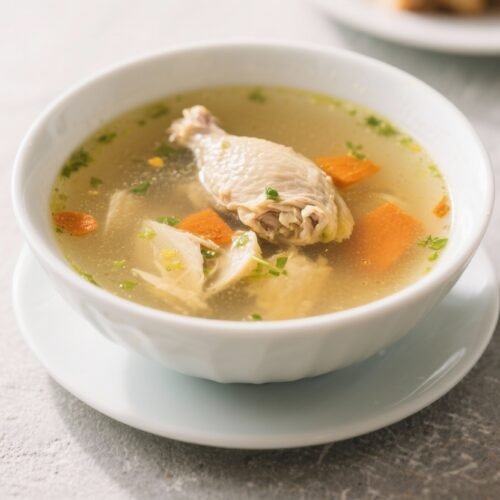
Chicken Soup - Simple, Comforting, and Homemade
Ingredients
- Chicken: 2–2.5 pounds bone-in, skin-on thighs or a small whole chicken
- Water or low-sodium chicken broth: 8 cups
- Onion: 1 large, chopped
- Carrots: 3 medium, sliced
- Celery: 3 stalks, sliced
- Garlic: 4 cloves, minced
- Bay leaves: 2
- Fresh thyme: 4–5 sprigs (or 1 teaspoon dried)
- Parsley: A small handful, chopped (stems reserved for simmering)
- Olive oil or butter: 1–2 tablespoons
- Salt and black pepper: To taste
- Optional add-ins: 1 cup egg noodles, cooked rice, or diced potatoes; a squeeze of lemon; a pinch of red pepper flakes
Instructions
- Prep the aromatics. Chop the onion, carrots, and celery into even pieces so they cook evenly. Mince the garlic. Rinse the parsley and set the stems aside for the pot.
- Sear for flavor (optional but recommended). Heat olive oil or butter in a large pot over medium heat. Add the chicken, skin side down, and sear for 3–4 minutes per side until lightly browned. Remove and set aside. This step adds depth to the broth.
- Soften the vegetables. In the same pot, add onion, carrots, and celery with a pinch of salt. Cook 5–7 minutes until the onion is translucent. Stir in the garlic and cook 30 seconds until fragrant.
- Build the broth. Return the chicken to the pot. Add water or low-sodium broth, bay leaves, thyme, and parsley stems. Bring just to a boil, then reduce to a gentle simmer.
- Skim and simmer. Use a spoon to skim any foam from the surface in the first 10 minutes. Simmer uncovered for 35–45 minutes, or until the chicken is tender and cooked through. Keep it gentle—rolling boils can make the broth cloudy and the meat tough.
- Shred the chicken. Transfer the chicken to a bowl. Discard the skin and bones, then shred the meat into bite-sized pieces. Remove parsley stems, thyme sprigs, and bay leaves from the pot.
- Adjust seasoning. Return the shredded chicken to the pot. Taste and season with salt and pepper. If using noodles or potatoes, add them now and simmer until tender. If adding cooked rice, stir it in during the last few minutes to warm through.
- Finish and brighten. Stir in chopped parsley. Add a squeeze of lemon for freshness if you like. The soup should taste clean, savory, and balanced.
- Serve warm. Ladle into bowls and enjoy as-is or with crusty bread. This soup only gets better after resting, so leftovers are a bonus.
Printable Recipe Card
Want just the essential recipe details without scrolling through the article? Get our printable recipe card with just the ingredients and instructions.

Sarah is a café cook and weeknight–recipe expert who specializes in simple, and healthy-ish meals. She creates recipes packed with flavor, perfect for anyone who wants great food without spending hours in the kitchen.