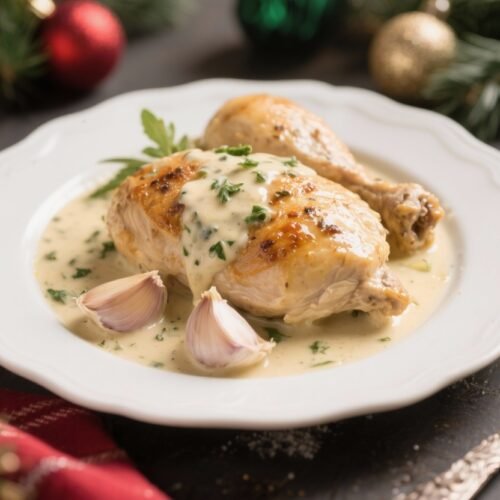
Prep the chicken. Pat the chicken dry. If the breasts are thick, slice horizontally to make cutlets or lightly pound to even thickness (about 1/2–3/4 inch).
Season both sides with 1 teaspoon salt and the black pepper.
Preheat the pan. Heat a large skillet (stainless steel or cast iron) over medium-high. Add olive oil and 1 tablespoon butter.
Sear the chicken. When the butter foams, add the chicken in a single layer. Don’t overcrowd—work in batches if needed.
Sear 4–5 minutes per side until golden and almost cooked through. Transfer to a plate; tent loosely with foil.
Soften the aromatics. Reduce heat to medium. Add the remaining 1 tablespoon butter.
Stir in the sliced garlic and shallot with a pinch of salt. Cook 2–3 minutes until fragrant and lightly golden at the edges—avoid browning too dark.
Deglaze. Pour in the white wine (or broth). Scrape up browned bits with a wooden spoon.
Simmer 1–2 minutes to reduce by about half.
Build the sauce. Add the chicken broth, cream, Dijon, thyme, and a small pinch of red pepper flakes if using. Simmer gently, stirring, for 3–5 minutes until slightly thickened. Avoid a hard boil to keep the sauce smooth.
Layer the garlic. Grate or press the remaining 2 cloves of garlic directly into the sauce for a fresh, bright note.
Stir in the Parmesan if using.
Finish with lemon. Add lemon zest and 1 teaspoon lemon juice. Taste and adjust salt, lemon, and pepper. The sauce should be savory, lightly garlicky, and balanced.
Return the chicken. Nestle the chicken and any juices back into the pan.
Simmer 3–4 minutes, spooning sauce over the top, until the chicken is cooked through (internal temp 165°F/74°C) and the sauce coats a spoon.
Garnish and serve. Sprinkle with chopped parsley. Serve immediately with mashed potatoes, buttered pasta, roasted potatoes, or steamed green beans.